Highlights stay in the PDF
You underline a lot and mark everything, then a few days later you cannot recall why it mattered.
Read the PDF, pull the key excerpts, unpack the method and rebuild it as a map without leaving the same board. Your reading stops living inside the original file.
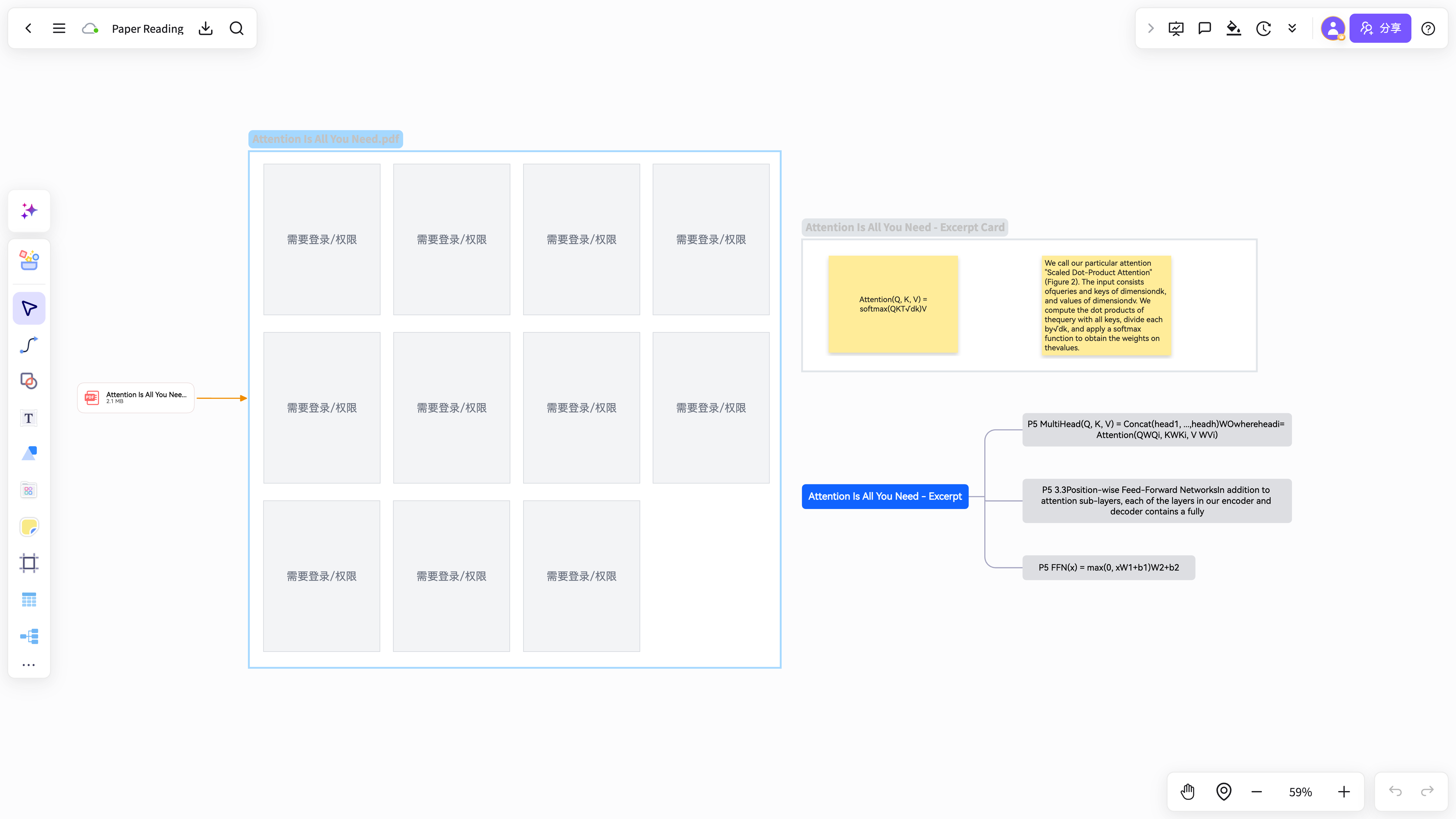
You underline a lot and mark everything, then a few days later you cannot recall why it mattered.
Understanding a single paper does not add up to a knowledge structure you can reuse across topics.
Reader, note app and mind-mapping tool keep switching, so what you learned rarely gets consolidated.
Excerpts pile up, but without research questions, method comparisons and themes, the literature review starts from scratch.
Capture the research question, method, variables, findings and limitations up front to avoid transcribing twice.
Condense key passages into question, method, conclusion and argument thread, with a clear hierarchy.
Lift the single-paper reading into a knowledge structure you can compare, reuse and drop into a review.
Annotation is not the endpoint: NuromBoard keeps the reading flowing into knowledge structures and research frameworks.
NuromBoard upgrades single-paper understanding into a thematic knowledge network instead of stopping at the excerpt layer.
Record research question, method, findings and limitations so one paper is understood and then properly organised.
Place several papers under one thematic frame to build a review structure that is easy to compare.
Structure the research questions, variable relationships and research paths found in a paper.
Turn papers you have read into theme threads, method comparisons and research gaps for writing or a proposal.
Yes. It is especially useful early on, when you first shape themes and research threads so you do not redo the same sorting later.
Ordinary excerpting preserves the original text. NuromBoard focuses on turning reading results into structured, comparable and reusable knowledge frameworks.
From reading and annotation to mind-map notes and knowledge capture, NuromBoard turns high-frequency knowledge work into reusable outcomes.