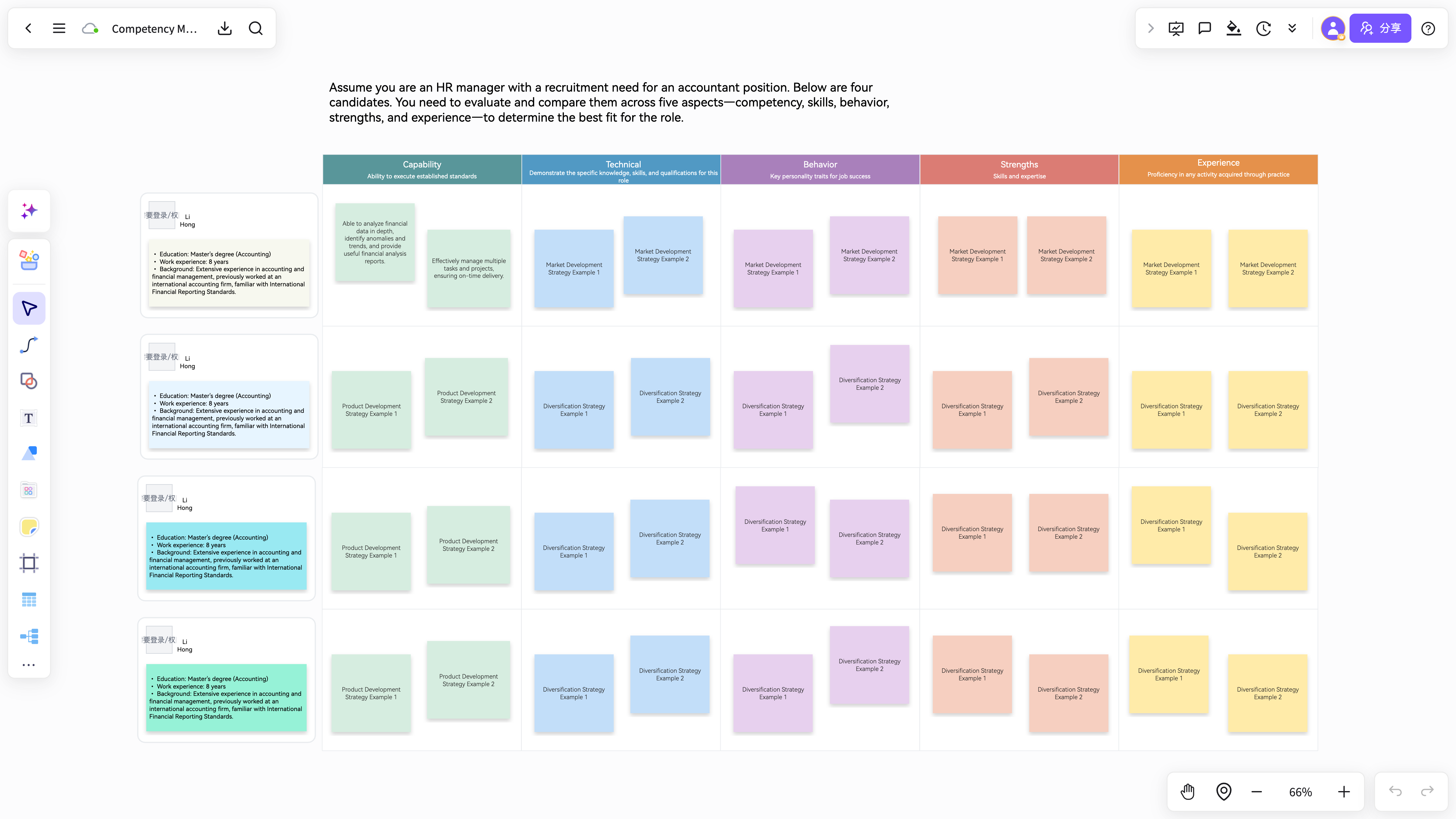
Role competency model template
Build a clear competency structure around responsibilities, requirements, and behavior standards.
Use NuromBoard to organize role capabilities, evaluation dimensions, and growth paths into a clear competency model, with online editing, reusable templates, and team collaboration.
Start with a draft for role capabilities, talent reviews, or growth paths, then refine it.
Build a clear competency structure around responsibilities, requirements, and behavior standards.
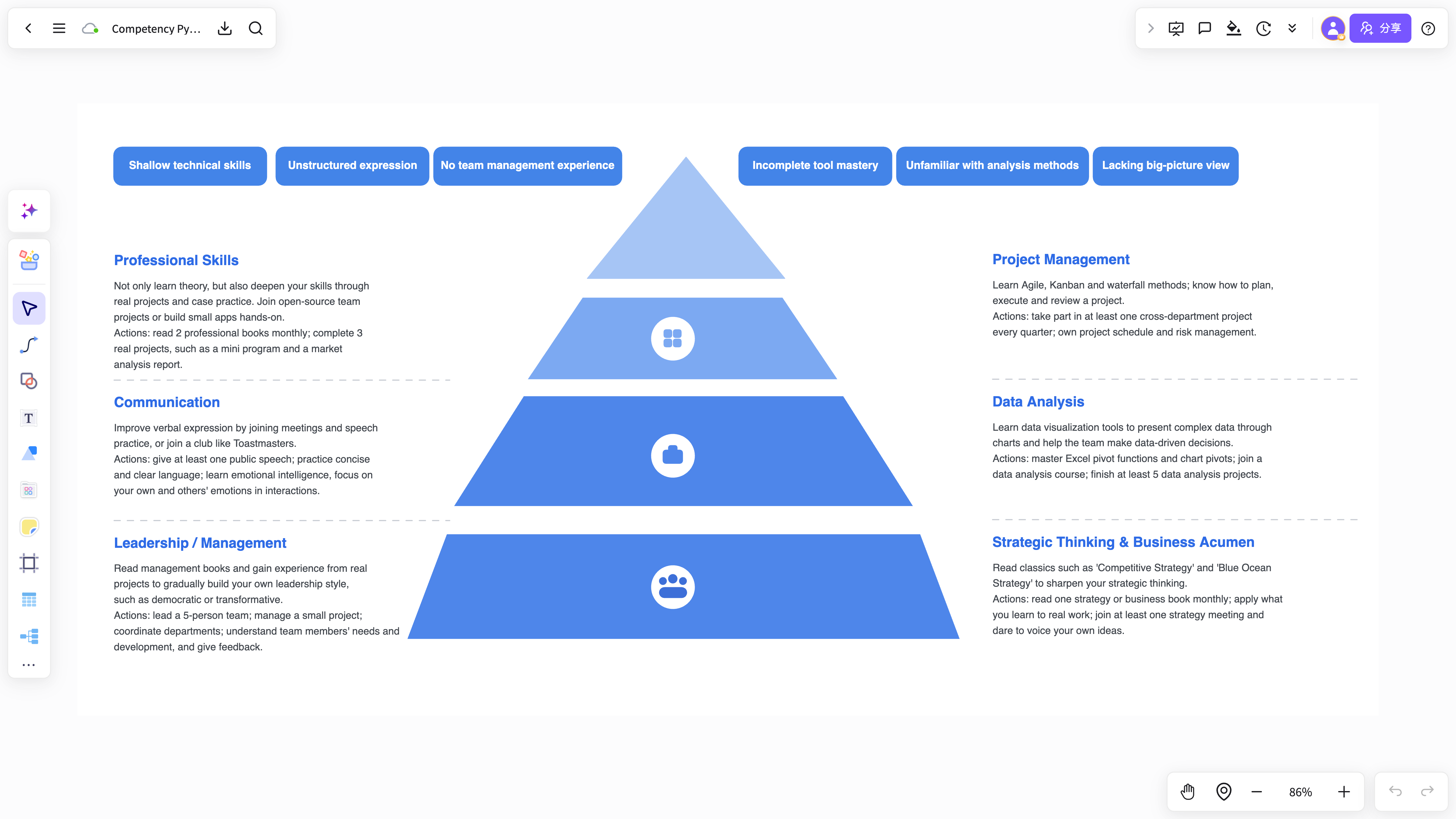
Organize core competencies, evaluation dimensions, and development ideas in one framework.
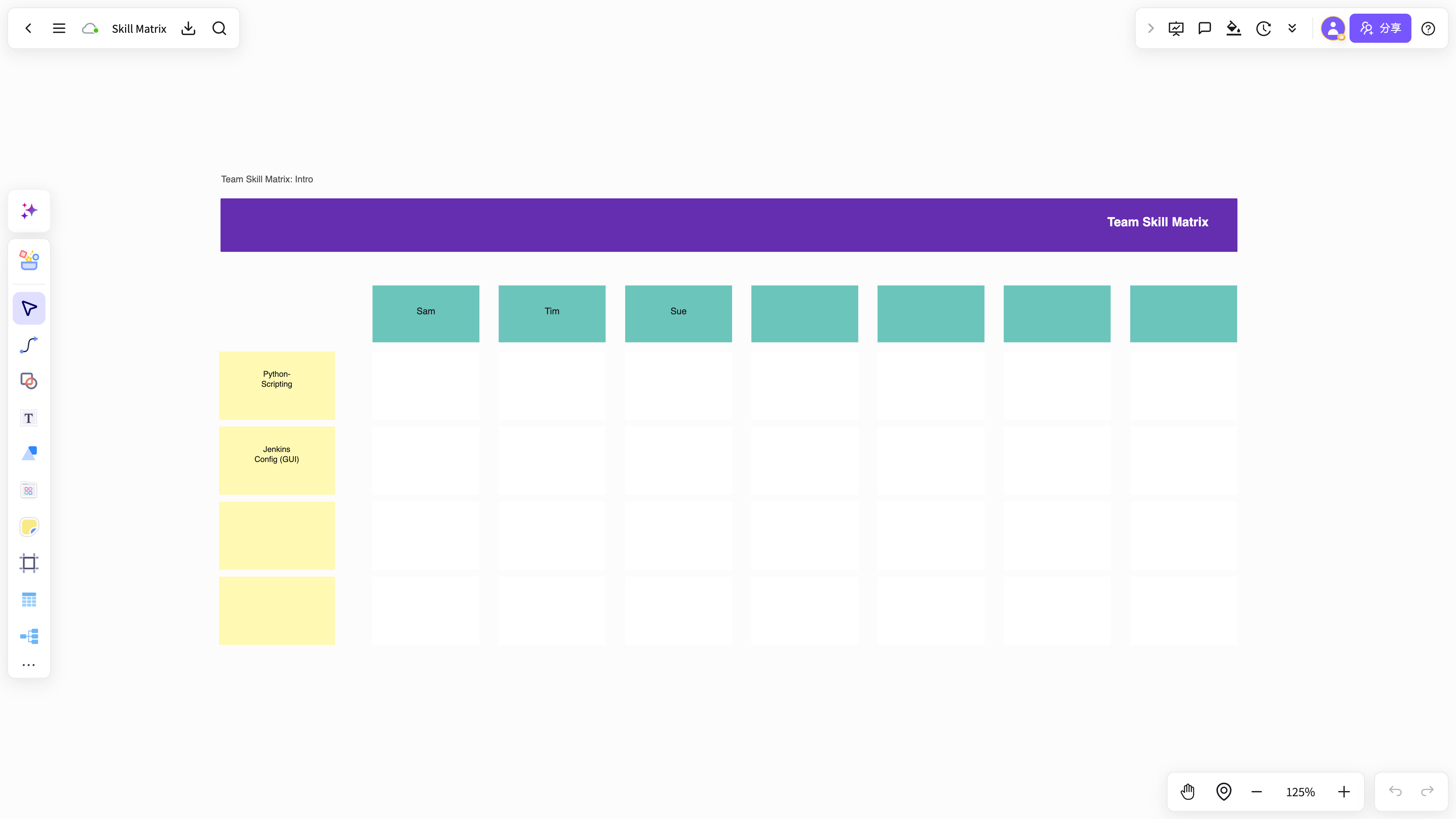
Build a practical competency model from role standards, business requirements, and growth paths.
Add role responsibilities, business context, or evaluation notes to create dimensions, behaviors, and criteria.
Start freeAdd role descriptions, evaluation standards, notes, and background materials around the competency framework.
Start freeHR, business owners, and managers can add standards, growth paths, and practical applications together.
Start freeFrom AI generation and team collaboration to long-term knowledge capture, keep capability planning moving beyond one diagram.
Create dimensions, levels, and behavior descriptions from role context and competency requirements.
Start with a template for role standards, talent reviews, or growth path design.
Make dimensions, level requirements, and behavior standards easier to explain and evaluate.
Team members can add role standards, evaluation evidence, and usage recommendations together.
Keep role requirements and competency model changes from every stage for long-term reviews.
Import role descriptions, evaluation forms, PDFs, and meeting notes, then organize them into a model.
Turn role context and competency requirements into a framework built for evaluation, development, and collaboration.
Start freeAnswers about workflows, collaboration, and structure that lasts after the meeting.
AI competency model helps with brainstorming, planning, business analysis, project work, and team collaboration when ideas and materials need to become a clear, editable result.
NuromBoard turns documents and meetings into editable structures on one shared working file — so AI competency model moves from a draft into something the team keeps refining after the session.
Yes. Teams edit together, leave feedback, share work online, and review versions on the same working file so discussion and decisions stay connected after the meeting.
Yes. Consultants use AI competency model alongside frameworks like SWOT, PEST, and competitor analysis to structure findings and present recommendations, and teams can invite clients to review the same shared working file.